
01 / 04
Agent lifecycle
Create, retrieve, update, and archive AI agents with model, transcriber, voice, timing, recording, and handoff settings.
REST API, OpenAPI, TypeScript SDK, and guided implementation support. Connect channels, CRM, calendars, and knowledge sources to production voice agents.
# Dispatch a phone call
curl -X POST \
  https://api.itellico.ai/v1/calls/phone \
  -H 'X-API-Key: <api-key>' \
  -H 'Content-Type: application/json' \
  -d '{
     "agent_id": "agt_2K9...",
     "to_number": "+43 664 ...",
     "external_id": "lead_84120"
}'Three entry points cover most rollouts: the public API reference, the typed SDK, and key-based authentication.

01 · REST
Manage accounts, agents, providers, phone numbers, SIP trunks, conversations, and analytics through the public API reference.
Open API reference
02 · SDK
Use the documented SDK path for typed clients, authentication handling, structured errors, and less request boilerplate.
View SDK docs
03 · Auth
Create and manage programmatic access from the dashboard, then store keys in environment variables or a secrets manager.
Manage API keys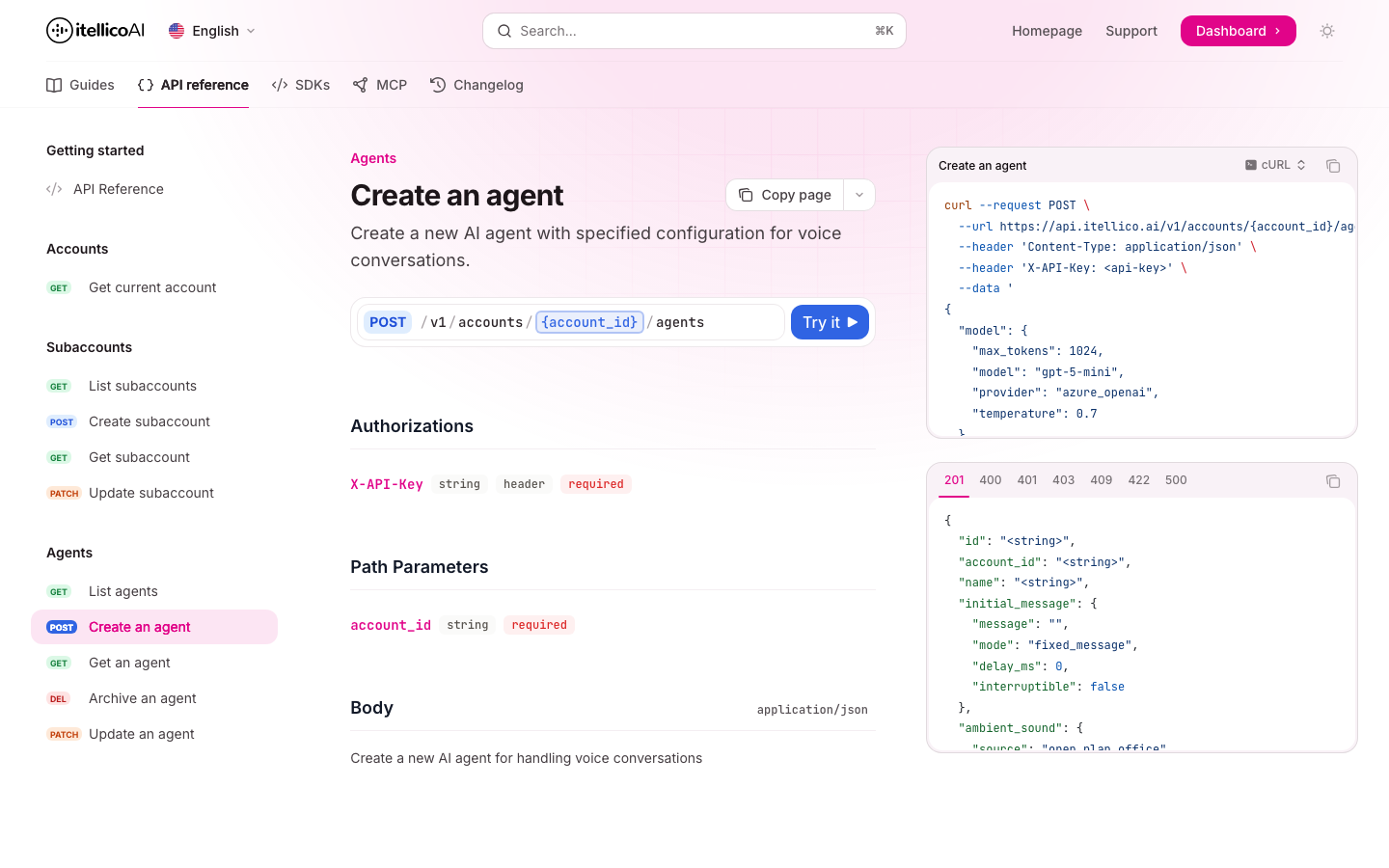
The API is organized around the resources teams need for production voice AI: accounts, agents, providers, phone numbers, SIP trunks, conversations, and analytics.
01 / 04
Create, retrieve, update, and archive AI agents with model, transcriber, voice, timing, recording, and handoff settings.
02 / 04
Manage phone numbers and SIP trunks for inbound, outbound, and BYOC deployment paths.
03 / 04
List available models, transcribers, and voices so applications can present valid configuration choices.
04 / 04
Read conversations, status, direction, messages, recordings, and usage analytics for QA and reporting workflows.
Start with the API reference and SDK docs. When telephony, data access, QA, or compliance rules get specific, we can help map the implementation path.
Public docs · OpenAPI 3.1 · TypeScript SDK